When the World Calls You Evil for Loving Christ • Nov 22, 2025

Church Life Forges Real Workers • Mar 18th 2000
What was happening behind the scenes before Paul wrote the Book of Romans?
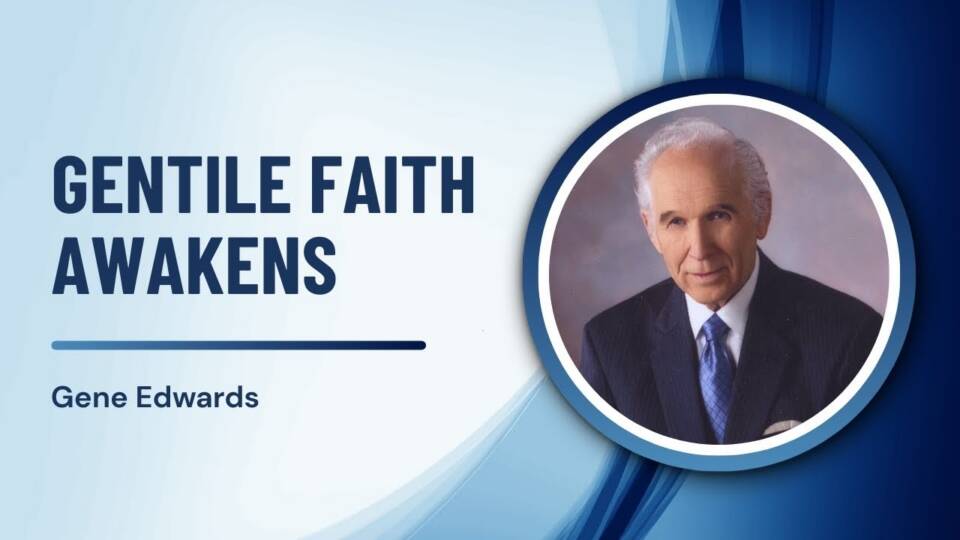
In this fascinating study, Gene Edwards explores the remarkable historical background that led to one of the most influential letters ever written. Before Romans was penned, Paul spent years raising up churches, mentoring workers, and establishing strong Gentile fellowships throughout the Roman Empire. Understanding this history provides fresh insight into the message of Romans and the believers who first received it.
This teaching follows Paul’s ministry after Corinth and Ephesus, highlighting his strategy of developing mature believers and sending them into new regions to establish churches. Gene examines Paul’s unique approach to discipleship, leadership development, and church planting, showing how workers such as Timothy, Titus, Tychicus, Trophimus, Aristarchus, Gaius, and others became instrumental in spreading the gospel throughout the Roman world.
The message also explores the important role of Priscilla and Aquila, the formation of the Ephesian line of churches, and Paul’s vision for establishing a strong Gentile witness in Rome before he ever arrived there personally. Viewers will gain a deeper appreciation for the network of believers, workers, and churches that helped shape early Christianity.
A major focus of this study is Paul’s deliberate effort to bring together believers from diverse church backgrounds, allowing them to learn from one another and carry the riches of church life throughout the empire. This historical context helps illuminate the audience, purpose, and significance of the Book of Romans.
Whether you are studying Romans, exploring early church history, or seeking a deeper understanding of New Testament Christianity, this teaching provides valuable insight into the people, events, and ministry strategy that stood behind Paul’s greatest letter.
In this video you’ll learn:
This teaching is part of Gene Edwards’ series on the historical and spiritual background of Romans.
Praise the Lord. Read the story. It’s always at the end of the little epistles, those little notes that he sends down there. He sends Titus all over creation. He sends Timothy wherever he can. And you know what? He picked up two more. He picked up two more in Ephesus. Do you understand? Two more young men. You guys come up here. I would like to introduce you to Tychicus and Trophimus. Now, if I’ve done this right, there are eight of you. One, two, three, four, five, six, seven, eight. The Father gave the Lord Jesus twelve; the Lord Jesus gave Paul eight. There they are. Those, praise the Lord, those are the men, those are the men who took the gospel to the world, not the twelve apostles. The twelve apostles took the gospel to the Jews; these men took the gospel to the Roman Empire. When you trace your lineage back, you won’t come to Peter. You’ll come to these men. If it hadn’t been for these men, there would have been no freedom in the gospel. They came from three churches, free of legalism—heathens, like you and me. These are not Jews; these are Gentiles going out to preach to their own people. This is where our heritage as non-Hebrews begins—right there. Amen, amen. All that you read about what happened in the Roman Empire during the first three centuries—trace it back to these men, to these men. Praise the Lord.
Now, are you impressed with this? Brother, be impressed. Sisters, be impressed—and raise your eyes to the hills. Now, that’s genius number one, and now I’m going to tell you about genius number two. Now, what is the Ephesian line? The Ephesian line of raising up the churches is very much like what the Lord Jesus did. It’s an apostle, a church planter, taking some young men, showing them how by demonstration, watching. This is what you call on-the-job training—and then taking those young men out to small towns and showing them how to raise up the church, letting them do it. Young Gentile kids, young men.
Now, will you please notice that every one of them has church life in their background? Every man who is ever going to be a worker ought to have church life in his background. Don’t be so proud and start at the top; start at the bottom. Start in the church. We have too many men who want to start off being apostles. We need men and women who grew up in the body of Christ and took their hard knocks, learning how the church functions—not that you are a leader, a dictator, a god, or a demigod —but you gain an experience of the church. You were there from the beginning. You’ve been called of God to preach the gospel, and you have sat under a church planter. These men sat under Paul, right? Paul sat under Barnabas. Barnabas sat under the twelve, and the twelve sat under the Lord Jesus. Each of them sat under church planters. And that’s not all—there will be two or three more men added. One of them will be Epaphroditus, my favorite among them all. One will be Epaphroditus. Later, there will be Apollos, who never could get his act together, but there will also be a young man named Zeus, who will be added to this illustrious, glorious crowd. Say, “Praise the Lord!”
Sit down, and I will tell you about…now we come to the book of Romans. Now, isn’t that wonderful? Look at it. What have we got? Now comes the Roman line of churches. Now, did you notice what Paul did? He extracted young men from the churches he raised up who had been called of God to the gospel—called men. Do you understand? They’re very rare. They don’t happen very often. He has been in Ephesus for two years. He has been with Priscilla and Aquila. He walked in there with six or seven men, with eight men. Well, six men, and added Tychicus and Trophimus. He walked in there with six men from churches he raised up – called men. For two years, he preaches in Ephesus, and they watch him raise up a glorious church. Then guess what happens—the ban on Jews living in Rome is lifted. Now, he’s still doing his job in Ephesus and in the surrounding areas with these young men, but at the end of two years, he comes up with the most incredible…and this whole evening has been for this…he comes up with the most incredible idea that’s as great an idea as this one you just saw. He wants a Gentile church in the city of Rome, and the ban has been lifted, and Jews can go back.
Now, who has just been really brainwashed? Name me two Jews who have just been brainwashed with Gentile church life. They are Jews, and they are friends, and they’ve got the picture. Here’s what Brother Paul does: he wants a Gentile church in Rome, and he wants it according to Paul. Now, there may have been believers gathered there previously; they must have been Jewish people. The ban is lifted. He hears it’s lifted. As soon as he heard it was lifted, he swung into action. He wants to beat Peter to Rome. He’s heard a tale that Peter also said he’d like to go to Rome, you know, and some of the others, and Rome is the largest city in the world, and it’s the capital of the world. It’s the most influential city on this earth, and he wants a church raised up, and he wants it raised up right.
And that’s not all. He has a real sense that his life on this earth is very— is coming to a close because he’s getting death threats constantly, and he’s not sure he’ll ever get to Rome. And you remember, he picked up men called of God to the ministry and took them with him to Ephesus. Well, he doesn’t do that this time. He goes back to his churches—his Gentile churches—among people who’ve never been anywhere, and he says, “Would you two ladies move to Rome?” “Where’s that?” “Would you go with Priscilla and Aquila?” “I’d go anywhere with Priscilla and Aquila.” “Would you go to Rome? Would you move there?” “Would you move to Rome? Would you? Would you pick up and move there? Oh, hey, we need some single brothers in Rome. Would you, and you, and you, and you, and you, and you, and you, all move to Rome, get a house in Rome, and start a single brother’s house? Would you do that?”
Do not tell me Paul of Tarsus did not raise up the church in Rome! He did the most unique thing in this world. He did basically what he did in Ephesus, not with men called of God, but with ordinary Christians. And he brought them out of his churches everywhere—Gentiles who know what it is to be free, who have wild, wonderful meetings, who’ve never been in a Jewish synagogue, who have never memorized the law, have never heard of the Torah. And he sends out letters everywhere: “Is there anybody in the church in Lystra who’s willing to move to Rome? Is there anyone in the church in Thessalonica or Berea? Any place, every place.” And then…he’s fair…he writes the freest people he knows in Jerusalem and says, “Don’t tell anybody I’m writing this letter, but would you mind moving to Rome? I’d like to see you come up there.”
And Paul of Tarsus, who has been in Ephesus for two years, gets a small army headed for the city of Rome to begin meeting there in hopes that he will one day arrive. Tomorrow night, we will meet the brothers and sisters to whom the church, the letter of the Romans, was written. They have come out of his ministry, plus the two or three years after that, the people they’ve led to the Lord, and the little handful that might have already been there. He gets one brother from Ephesus. He gets Priscilla and Aquila. He gets…I’m not going to tell you who else he gets. We’ll find out tomorrow night who it is that goes to Rome, and very, very quickly, he stays in Ephesus and in the country around Ephesus for two more years with his eight young men, and then he starts making a trip everywhere where he has preached before, and he is literally telling everybody goodbye. He is sending his eight men out everywhere.
He sends Titus to Crete. He sends—I think he sends Timothy to some town I can’t pronounce, Illyricum or something like that; I’ll tell you what it is tomorrow night. He’s sending these men everywhere, and he sends one or two of them to Rome. Then he starts visiting all of his churches like one great goodbye, and wherever he goes, he is told that if he dares to go back to Jerusalem, he will probably be killed, but he feels he must go to Jerusalem before he goes to Rome. He’s got a bunch of Christians in Rome waiting for him. He returns to Corinth and stays with the Corinthians for three months, and there’s a growing sense on the part of all the churches and all the people that Paul should not return to Jerusalem. He will surely be killed, or something terrible is going to happen. He is in Corinth for three months on a short visit, and all those people have gotten to Rome, and they’ve won a lot of new people to the Lord. And Paul of Tarsus sits down and writes the greatest letter ever penned. And that’s not my opinion; that is the opinion even of secular history. That is the most influential single piece of literature that has ever been penned by the hand of man: the Book of Romans, if you please.
He writes that letter to his friends and to people he’s never met. It’s a deliberate letter, meticulously written, and it covers everything about the Christian life and church life. We have met in Chicago to see that part of the letter that was written concerning church life. It was written from Corinth by a man who felt he might never write another letter as long as he lived. This was, probably from his viewpoint, the last thing he would ever pen. Tomorrow night, we will find out that a sister in one of the churches, nearby Corinth, is going to put that in the folds of her dress and get on the ship and take it to Rome to deliver it to that little body of people who Paul sent there, who got there before Peter got there. And that’s tomorrow night. Now, do you think you understood all that? I doubt it.
Praise the Lord. Praise the Lord. And to the brother who is the cameraman, we apologize to him. He’s probably not used to four-hour meetings, but I think most of us are, are we not? Long meetings—that’s typical of the Lord’s house. Brothers and sisters, I’m very excited. Tomorrow night, we will dwell only on the people who received the letter. We will meet them. They are absolutely wonderful people. Then we will dive into chapters 12, 13, 14, and 15, and seek to find out what was going on in Rome, and what probably was the kind of thing going on in all churches in the first century, because Paul writes this out of the riches and the sorrows of his whole life, so we can come to it knowing that it’s got a message for everybody who’s seeking to experience church life. Praise the Lord. I hope this turns out to be as good as I hope it will be.
When the World Calls You Evil for Loving Christ • Nov 22, 2025

This Is How You Must Honor The Son • Nov 22, 2025
Truth Changes Everything • Jan 01, 2014