Christ Made You Holy • Mar 05, 2026

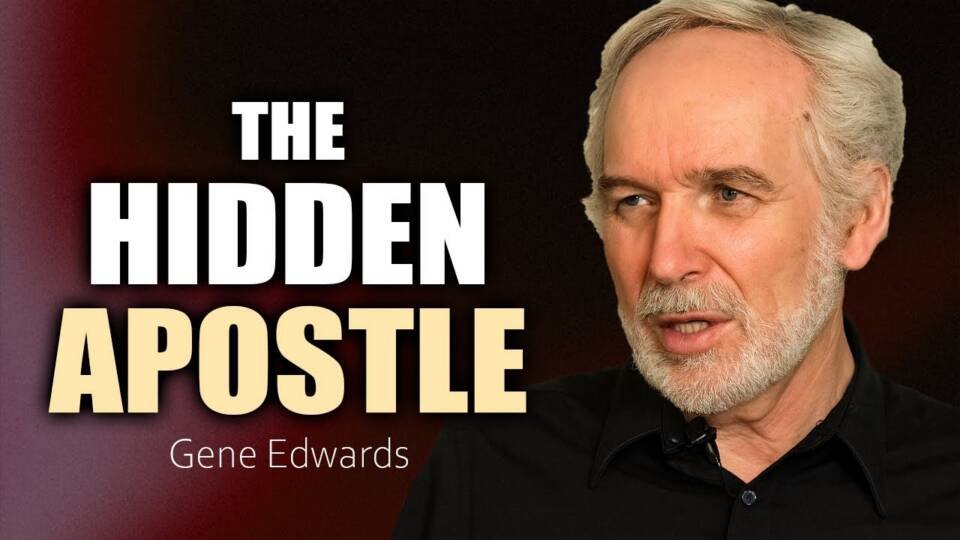
The Road to Antioch • Dec 01st 2012
The whipping scars on the Apostle Paul were so profound that Peter, the chief Apostle, remarked that they were “so similar to our Lord”. Discover the true cost of spiritual transformation when God calls a man into the wilderness, refining him through unthinkable suffering—including the loving agony of salt being poured into his open wounds to prevent infection. Gene Edwards unpacks the intense, hidden years between Paul’s conversion and his eventual public ministry to the Gentiles, all set against the backdrop of the most depraved and wicked emperor the world has ever known, Gaius Caligula. We explore Paul’s solitary time in Arabia, where the Pharisee was “drained out” of him, allowing him to see Christ revealed on every scroll. This message reveals the incredible spiritual maturity born of pain, the confrontation with absolute worldly evil, and his astonishing discovery of the first Gentile church in Antioch.
Paul dismissed himself and went back to the home of Andronicus, knocking on the door. There was a moment of fear and then a hug. “We have heard that you are now a follower of the Lord. Does that mean that you have abated your anger toward me and toward my wife?” Paul clasped his hands over his chest. “You cannot possibly know how enraged I was when I came in from this moment, this day, this propitious day, when Gamaliel was speaking of the coming of the Messiah and preparing us for the possibility that when he came, he might not be a militant, and then to come home and hear that you were in Christ. It was the rage that I carried with me that day to the Freeman’s, to the Libertine synagogue. It was part of that rage that caused me to give consent to his death and to go from house to house, dragging men and women and children to the prison.”
There was a long time of sharing and crying, asking for forgiveness and receiving it. And then Paul asked, “Is there room underneath the staircase? Andronicus said, “Paul, we prayed for you. And as hard as it was for us to conceive with our minds, we never doubted, one day you would know him.”
The next day, Paul made his way to the Libertine Synagogue, circular on three sides, filled with chairs; the other side held a box containing whatever portions of the Torah that they may have managed to purchase at exorbitant cost. Paul spoke. Paul debated. He came back the next day again. Each day, the crowds grew larger and larger. And finally, someone whispered to him after the meeting, “Don’t go out the door. Not yet. Come, come through the backway. You’re a believer. I am one of the followers of the way. Barnabas asked me to be here every day that you were here. He also attended one of the meetings, but you were not aware of it. He stayed out of sight. The man really does believe in you, Paul.” I am honored, said Paul.
You’ll have to leave by the back door. We know that there is a plot to kill you tomorrow when you step into the synagogue. “For me. A plot? No. You speak of Stephen. No. No, Paul, now it is you and I who have brought you here to hide you, because it could happen as early as today. We have to get you out of Jerusalem just as quickly as possible. We wait for dark. And so, Paul stayed in the home of a Christian family he never knew, and about midnight that night, with horses and a group of Christians who had been planted all along the road to Caesarea to make sure that he was safe as he traveled. They never saw his face; his face was hooded, but they had heard that this one, who once persecuted the church, now lives for Him. Two days hiding, and then a ship headed due north. It would stop at Sidon and Tyre and bring him finally back to his home in Tarsus.
It was in 27 A.D. that Jesus Christ began his ministry. It was in 37 that Tiberius died and was replaced by Gaius. It was also now, in the year 40 A.D., that Paul was returning home. The city of Jerusalem was too dangerous a place for this new follower of the way. And so, it was. And though he had traveled in his trade to Syria and other parts of Cilicia, he eventually ended up back in his own home city, waiting for God. After two, three years in the desert, a second beating in Damascus, 14 days with Peter and John and James, the brother of Jesus, not the other James, who was dead, and a few days of visiting and debating and sharing his testimony, all Paul had to show for it was the fact that he had finished that message that Stephen had begun. The last words that were spoken were about those who hardened their hearts against the Lord. It was there that Paul continued the message and fervently begged men and women to turn from their present ways and do as he did, and then gave his testimony of having met Jesus on the Damascus road. It is a message that he would bring over and over again, repeating the message of Stephen and then ending with his own incredible story.
So it was that Paul passed away the time, right there in his own hometown. It never occurred to him that other things might be happening in Israel. And then something happening in hated Antioch, Syria. Nor could he have possibly imagined that one day, unceremoniously, someone would open the door to the house where he lived.
The two men hugged one another and began talking furiously. Finally, Barnabas said to Paul, “First of all, it took a long time to find you here. You have not made yourself a reputation here as I might have expected.” And Paul answered, “I am waiting to go to the Gentiles.” And Barnabas shook his head and said, “Yes, and you cannot believe what I’m about to tell you. “Peter has baptized Gentiles.” Paul stood back in wonder. “Did you say Peter, the man who is so utterly committed to it being Jews only?” Exactly that. He was in Joppa, had been called over to Caesarea by the Sea, and was speaking to a group of people who were friends of Cornelius, a very devout Roman soldier. A Roman soldier, yes, and as he preached to them and God had shown him that he should, the Holy Spirit fell upon them, and they were at once converted and spoke in other languages exactly like on the day of Pentecost. And Peter baptized them right there in the presence of some other Jews who were just as astonished as Peter and even more so when he baptized them.
The church in Jerusalem was furious. The 11 apostles were waiting for him when he arrived back in Jerusalem. They were furious. Then Peter told the story of a dream he had, something to do with a sheet coming down from heaven filled with all kinds of unclean animals, and God spoke and said, “Eat.” And in the dream, Peter said, “Lord, I can’t eat any of this food. It’s unclean, and I’ve never eaten unclean food.” Quite a statement for a fisherman. And then God said, “Do not turn down that which I have called clean.” And that was just a few moments before visitors came, and Peter went to Caesarea and spoke to Cornelius and his people.
That’s not all that’s happened, however. Paul said, ‘I think I’d better sit down before I hear any more of this. His eyes were filled with tears. Finally, to the Gentiles. It is the year 41A.D., and Paul was saved in the year 37. That was five years of waiting. “How is your back?” asked Barnabas. “Fine; waiting for another one if necessary.” And then the two men talked for a while about what had happened from the time in 37 when Tiberius had died and the world was plunged into the leadership of a man gone stark raving mad.
Years of unbelievable horror of insanity. Some things were so wicked, unmentionable, and some things so typical of a madman that they had to be laughed at, but it was that, as Gaius Caligula was leaving a theater and taking an underground hallway back to the palace, that two men, one of them being Macro, whom he had insulted so many times, it was his last insult. He and several other men put themselves upon Gaius, and as it was said, it was on that day that Gaius found out he was not at all the son of Zeus, nor was he a god. He died.
Now, what was fascinating about all of this, as Barnabas said, was Agrippa. Now, Agrippa is not the son of Herod; he’s the grandson and born of a Jewish woman, he’s Jewish. And Tiberius had thrown him in prison. When Gaius Caligula became emperor, he had been a close friend, a childhood friend of Agrippa, for Agrippa, who had been born long before that, grew up with both Gaius and Claudius, and the first thing that Gaius ever did was to set Agrippa free. Now, at this moment when Caligula was dead, Gaius Caligula was dead, and the world of Rome was in carnage, Agrippa went to the soldiers and said to them, “You must choose Claudius as emperor,” and the guards stood with him, backed him, obeyed him, though he was nothing more than a friend of Gaius Caligula. They went to Cornelius, the centurions, and the guards, and they announced to the Senate that this is who they want to be emperor. And suddenly, Agrippa found himself once more the closest friend of an emperor. It had been Agrippa who had kept Gaius Caligula from putting that golden statue in the Holy of Holies, which would have surely caused the death of almost all the Jews, for they would have fought no matter who it was who came to prevent that from happening.
One of the Jewish leaders had said, “It is better that we, the Jewish race, die and not be one left upon this earth than the golden statue of Gaius Caligula be erected in the Holy of Holies.” It was Agrippa who had actually talked Gaius out of it. One great determination of his own was to have that golden statue in Jerusalem. And even after his death, it was found that though he had given his word to a Agrippa, he would not do what he had planned; he had none less sent word to Egypt, that he would soon be coming to Egypt and that statue would be molded and it would be delivered at Caesarea by the sea and it would be taken and placed in the temple.
Christ Made You Holy • Mar 05, 2026
Stop Playing Church • Feb 18, 2026
Escape Religious Cage • Jan 10, 2026