Christ Made You Holy • Mar 05, 2026

The Road to Antioch • Dec 01st 2012
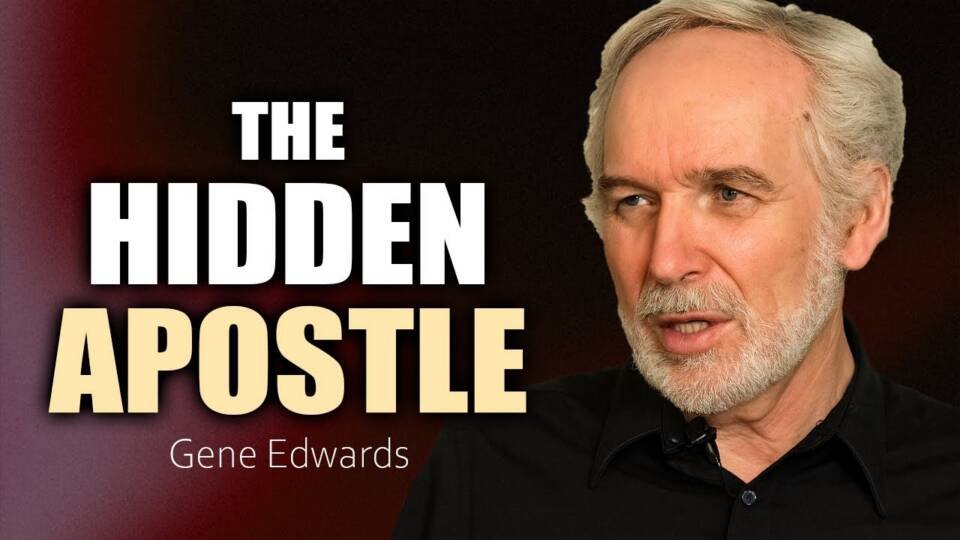
The whipping scars on the Apostle Paul were so profound that Peter, the chief Apostle, remarked that they were “so similar to our Lord”. Discover the true cost of spiritual transformation when God calls a man into the wilderness, refining him through unthinkable suffering—including the loving agony of salt being poured into his open wounds to prevent infection. Gene Edwards unpacks the intense, hidden years between Paul’s conversion and his eventual public ministry to the Gentiles, all set against the backdrop of the most depraved and wicked emperor the world has ever known, Gaius Caligula. We explore Paul’s solitary time in Arabia, where the Pharisee was “drained out” of him, allowing him to see Christ revealed on every scroll. This message reveals the incredible spiritual maturity born of pain, the confrontation with absolute worldly evil, and his astonishing discovery of the first Gentile church in Antioch.
Ever since childhood, every Jewish boy has always wondered what those 39 lashes must feel like, knowing full well he never wanted to find out by experience. Somewhere, he heard the sound of a box being opened. Something fell to the floor. Some voices, one after another, vying for the whip. A desire to be the one who beats Saul first. A scathing rebuke, charge after charge against him. As a moment of pause, Paul braces himself for the fact that it is far more painful than he ever imagined. Some men have died being whipped again and again. The manager of the synagogue moves; some of the whip lashes now go to his side, and then to his other side. And now others come down on his shoulders and are pulled hard downward. Others on his lower back, and then again and again between the shoulders. He can feel the skin beginning to give way. He collapses. The beating continues. Lash after lash, he waits; on it goes. There must have surely been 39 of them by now. On the verge of screaming and begging for mercy, it all stops. He is cut down to the floor, but tender and loving hands catch him.
There’s a great deal of crying. He’s lifted out bodily and carried somewhere he does not know. He feels cool water, warm water, and then cool water again; he feels cloth. When they’re taking him out of the synagogue, he heard the words ‘Clean up the blood’. He knew that he was bleeding. And he remembered words that he had heard quoted about Jesus. They’re going to throw you out of the synagogue, and if they kill you, they will believe that they have done God a favor. And he is pleased with having killed one who would assault the very religion of God. An hour, two, three. And a kind voice says Saul, infection, it will come, unless Saul asks for something to be put in his mouth.
Brother’s hands hold him on the right side and the left side, some his feet. Another braces his neck with a strong hand. And now the true pain begins. Out of love, someone begins pouring salt all into his wounds, for the infection cannot live where there is salt. He screams and screams, screaming again. There are murmurs of prayer; he hears some crying. He murmurs one word again and again, “Lord, Lord, Lord.” A few days later, the salt is replaced by honey, for it appears that infection cannot grow where there is honey, either, if it is pure.
He stays there for several weeks, and then he hears the news. It is October and the new emperor, not yet an emperor for a year, has been running some raging fever and seems to have drawn him totally incoherent. with screams of madness, delusion, and all the empire, including the Jews, turn to praying for him. He (the emperor) will one day say to them, “You have prayed for me, but you have not prayed to me.” And so, it comes about in December that little by little he begins to recover, but the man (the emperor) who comes out of the fever is not the young man who went into it. This is a diabolical obsessing of the human soul.
At this moment, in the year 38 A.D., is loosed upon this earth the most wicked, cruel, most evil, savage, barbaric, madman of a leader that the world will ever know, the one who rules over men and lands. There has never been or ever will be anyone as depraved and imaginative in his depravity or sick in his heart or his mind as is this man whose name is Gaius Caligula. If you ever want to find out just how depraved this man was, you will never find anyone to tell you. You’ll have to read about it. Some things can be said and are said, but some of it no man would ever tell. Perhaps to print, but never to speak. It was beyond the imagination of men to conceive in his depravity.
Two things he did immediately after he became well. One was to have killed anyone whom he suspected of trying to take advantage of him while he was in that fever for two months. He was walking along with a friend and asked his friend who was the greatest, Apollos or Gaius, and because the man hesitated for just a second, the man was tortured to death. Gaius had just figured out that different parts of the body in pain will elicit different kinds of sounds. A deep moan, a high shrill, the soprano sound. He taught his soldiers to learn to play music in the tortured screams of a man.
What happened to Paul after the beating and the healing? He did the same thing every other man has ever done who’s gone through a great religious change in his life. Moses, from a Pharaoh’s son to a wilderness, for the length of a lifetime. Jesus went out into the wilderness to be alone after he was baptized, and Paul, along with many others, also went out into the wilderness to be alone. Not a single person knew him by face who had not met him before when he left Damascus and went out into Arabia. He was there for over two years, living not too far from Petra, attending a very small, obscure synagogue, a gathering of a small group of Jews, but who had the largest portion of a Torah that he could have read to him, every Saturday or during the week; no man read a Torah except the manager of the synagogue. And so it was that the Pharisee drained out of Paul. His interpretation of the Torah left him. His reading of the scripture came to him in a totally different dimension. The creation took upon him a whole new meaning; on every turn of the scroll, it was Christ and it was Christ and it was Christ.
At the end of two years, Paul had missed a large part of some of the great tragedies of the Roman Empire. Gaius had taken over as emperor by the end of the year 39. At the point when Rome was richer in money than at any other time in its history before, after those two short years, Gaius bankrupted the empire. His way of securing money, now beyond taxes, was to turn one wing of the palace of Rome into a brothel, to have men come and be forced to will to him personally their estate, only to be killed shortly thereafter.
A one-mile-long lake in northern Italy became the home of two of the most expensive luxurious barges the world has ever known. A large part of the empire’s money went to build those two barges for Gaius; as he was alone, they sailed one mile.
There was so much he (Paul) now faced, which he had never seen before. He arrived back in Damascus, this time no longer a friend of the Jewish faith, but now a hated and despised man in the eyes of all Hebrews who were not followers of the way, and thus it would remain for the rest of his life.
The world is different now. Everyone fears Gaius. He has killed his own grandmother. He publicly selects the wives of senators, at banquets, and takes one of them off to another room and comes back and describes in detail the affair and gives an evaluation of how well she did. There is hate that is growing, but there is nothing to compare with one above all else. At first, no one took him seriously, and yet he was determined.
Christ Made You Holy • Mar 05, 2026

Stop Playing Church • Feb 18, 2026
Escape Religious Cage • Jan 10, 2026