
Stop Playing Church • Feb 18, 2026

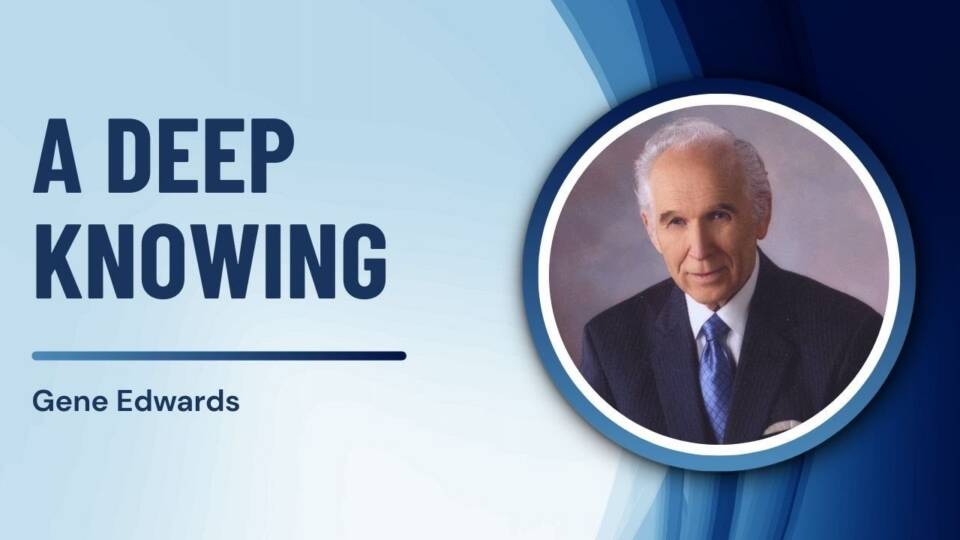
Feb 01st 1994
In this profound teaching from Debrecen, Gene Edwards explores the function of the human spirit and how believers learn to discern God’s will beyond intellect, emotion, or outward religious practice. Drawing from Genesis and personal experience, he describes Adam as a simple man whose spirit naturally “laid hold” of God and the unseen realm, offering a picture of how the human spirit was designed to operate before the fall.
Edwards contrasts the spirit with the soul and body, explaining that the spirit is given to apprehend God and spiritual realities, while the soul engages relationships and earthly life, and the body interacts with the physical world. Using vivid illustrations—including the analogy of a radio receiver—he portrays the spirit as quiet, intuitive, and deeply perceptive rather than analytical or verbal.
A central emphasis of this message is the difference between thinking, feeling, and spiritual knowing. Edwards warns that many believers confuse emotional impressions or mental reasoning with divine guidance, noting that genuine spiritual perception often comes without words and is recognized by a deep inward peace. He also challenges common assumptions about prayer, suggesting that surrender, stillness, and inward attentiveness often reveal God’s will more clearly than striving or prolonged petitions.
The teaching expands into a broader theological vision: humanity as spirit, soul, and body; the ongoing conflict between spirit and flesh; and the original design of humanity’s dwelling place in Eden—a “garden of pleasure” where heaven and earth met. Edwards ultimately points toward Christ as the fulfillment of what Adam foreshadowed and the restoration of humanity’s intended fellowship with God.
This message is especially helpful for believers seeking clarity in decision-making, deeper spiritual sensitivity, and a more inward understanding of walking with Christ.
If you want to die and go to heaven, you just go right ahead. I have my eyes on something nicer than heaven. I have my eyes on a place that’s got heaven beat and earth beat. It’s a little of both, and it’s where Jesus Christ will dwell forever. And that’s where I mean to be.
We’ll get to that later. Now, brothers, we’ll jump ahead in the story and discover that we got pushed out of our home. And so we wandered. And then he gave us a picture of our home when he gave us the tabernacle. Then he gave us a picture of our home when he gave us the temple. Then he gave us insight into ourselves, and that home when he gave us Jesus. And then he came and gave us the second-best thing to heaven, the second-best thing to an unfallen heaven and an unfallen earth. He gave us that which the temple, the tabernacle, the temple, and the Lord pictured for us. He gave us the Ecclesia.
And it’s a short walk from the Ecclesia to that garden. And when I have to say, when I have to say he gave us the church, and you and I think of a building, it makes me want to cry. It should never have been a building, saints. There’s not a Christian in the first, second, or third century you could have sold them a church building and say, here, take this instead of the Ecclesia. They will walk away from you. Why would I take a building instead of the body of Christ? Why would I take a building instead of community? Why would I take a building when I can have a garden? The garden of pleasure, a garden in the midst of pleasure.
When we come back, we’ll take a look at our home, and I tell you, from this point on, the book of Genesis chapter 2 to me is beyond belief, how this could have been so early, I don’t know. It really is beautiful, but if you’ve got anything to learn today, it is you’ve got a spirit to touch your Lord and you have a soul to touch one another, you’ve got a body to touch everything that’s physical. And you also have a place to live. And you’ve got the right to live in that place, so go get there. Go get in it and bring God’s people back to their rightful place.
Obviously, the enemy of man does not want us living in our home. He doesn’t even want us to have a home.
And may I, in closing, say, when we look at Adam, we see the image of God.
Now, when we see Jesus Christ ascend, we see that which Adam was created in the image of. Christ was complete when he ascended. He had a resurrected body that had destroyed death. His soul was always perfect. And he had a spirit that had passed through death into resurrection.
Stop Playing Church • Feb 18, 2026
Escape Religious Cage • Jan 10, 2026

Break the Dead Chains • Jan 10, 2026